3 hr
Jasper Wildlife Watch: Morning or Evening Tour
Search for native animals across Jasper's mountain valleys on a guided coach tour at peak activity hours
Reserve
Hand-picked by our editors — only the best 5 wildlife experiences from 22 reviewed.
Verified partners for every tour, free cancellation where available, and instant confirmation on every booking.
3 hr
Search for native animals across Jasper's mountain valleys on a guided coach tour at peak activity hours
Reserve
3 hr 30 min
Track elk, wolves, and mountain goats through snowy valleys on a guided morning expedition
Reserve
6 hr
Explore the stunning Maligne Valley by minibus with a naturalist guide, wildlife watching, and a scenic lakeside walk.
ReservePrices from verified partners. Availability updates in real time at checkout. Free cancellation policies apply where shown.
The landmarks, rooms, and views travelers on this tour remember — all visible on a single visit.
This viewpoint offers views of the wide valley floor where temperatures can reach below -30°C in January. Large herds of elk congregate here to feed on exposed winter grasses.
Known as the disappearing lake, this body of water drains entirely through a complex underground cave system every winter. The exposed lakebed becomes a barren, snow-dusted landscape.
This deep limestone gorge features frozen waterfalls that cascade down walls rising up to 50 meters high. The canyon provides a display of winter ice formations.
A wooden footbridge constructed in 1933 connects the mainland to a small pine-covered island in the center of the lake. It offers views of the frozen lake surface and Pyramid Mountain.
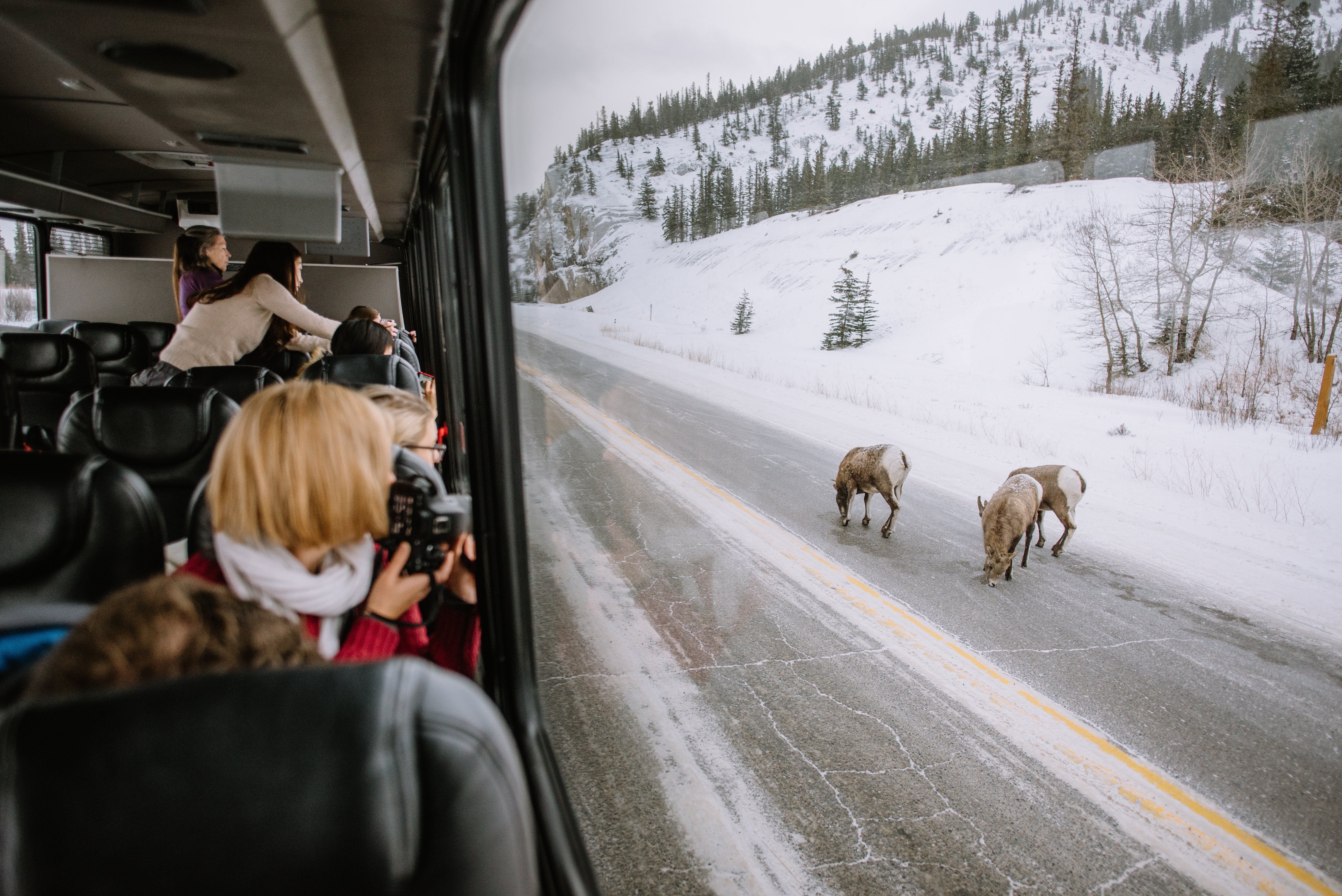
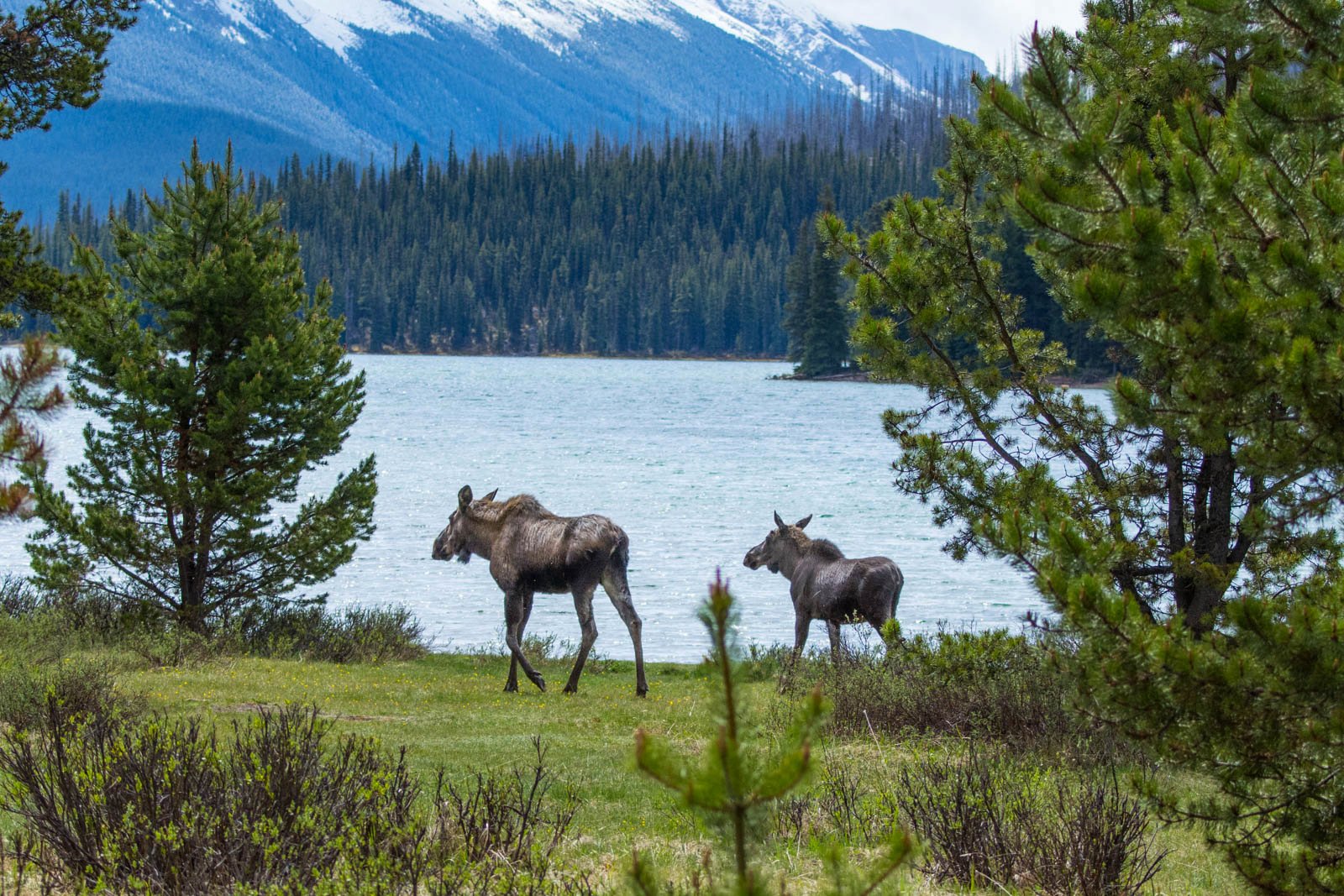
This scenic corridor stretches for 46 kilometers and serves as a migration route for local wildlife. It offers the highest probability of spotting moose and bighorn sheep in the snow.
They complement each other; purchasing your jasper wildlife tour winter tickets ahead of time secures a spot in a heated shuttle with an experienced driver. Navigating the snow-packed roads of Jasper National Park yourself can be highly challenging, especially during sudden winter storms. For travelers seeking group excursions, choosing guided jasper wildlife tour winter tours provides access to a network of guides who share live sighting locations. Alternatively, a general Jasper winter sightseeing tour offers structured safety while ensuring you spot bighorn sheep and elk in their natural habitats.
| Feature | Top pick Guided SunDog Tour | Self-Guided Driving |
|---|---|---|
Who handles winter driving |
Professional local driver | You (requires winter-ready vehicle) |
Wildlife sighting success |
Higher (guides coordinate locations) | Lower (rely on luck and signs) |
Commentary & local lore |
✓ | — |
Spotting gear provided |
✓ | — |
Cost |
$79 CAD per adult | Free (excluding car rental) |
Tour flexibility |
Fixed 3-hour itinerary | Fully customizable schedule |
| See tickets → |
Verdict: For safety on slick mountain passes and optimal animal tracking using professional spotting scopes, the guided jasper wildlife tour winter tour is the superior choice, while self-driving is best for visitors who require a fully customizable schedule.
Choose your ticket, select your date, and reserve in under two minutes. Secure checkout handled by our verified partner.
Instant confirmation by email, with a mobile voucher you can save offline. No printing, no queuing at a collection desk.
Arrive at the entrance, show your voucher on your phone, and walk in. Most tickets include priority or skip-the-line access.
Practical details for your visit straight from our verified partners — hours, access, rules, and how to get there.
607 Connaught Drive, Jasper, AB T0E 1E0, Canada
This is the primary public meeting point for out-of-town guests, featuring free public parking nearby.
Drive directly to the meeting point for the Jasper wildlife tour winter at 607 Connaught Drive. Free public parking is located at the west end of the VIA Rail Station building.
If staying at a downtown hotel, walk along Connaught Drive to the VIA Rail Station bus shelter. The town is highly pedestrian-friendly, with clear sidewalk signage.
Local taxi companies, such as Caribou Cabs, offer direct transfers to the tour office from outlying lodges like the Jasper Park Lodge.
For the Jasper wildlife tour winter, guests must wear heavily insulated winter clothing including a windproof jacket, insulated boots, gloves, and a warm hat. When temperatures fall below -16°C, snow pants are mandatory for safety during outdoor viewing stops. Dressing in thermal layers is highly recommended to adapt to changing vehicle and outdoor temperatures.
Small daypacks and camera bags are permitted on board the tour vehicle and can be stored under your seat. Large luggage and bulky suitcases are not allowed due to limited cabin space. No formal security screening is conducted, but drivers inspect all carry-on items before boarding.
Photography on the Jasper wildlife tour winter is highly encouraged, though tripods must remain collapsed inside the vehicle for passenger safety. Telephoto lenses are recommended as most wildlife sightings occur from a distance of 30 to 100 meters. Drone photography is strictly prohibited throughout Jasper National Park under federal aviation regulations.
The Jasper wildlife tour winter tour is a driving-based excursion with minimal required walking, making it suitable for guests with limited mobility. The tour vans are not equipped with wheelchair ramps, so passengers must be able to climb three vehicle steps independently or with assistance. Folding wheelchairs can be stored in the trunk if arranged in advance.
Mobile phones should be set to silent or vibrate mode during the guide's commentary to avoid disrupting other guests. Charging outlets are not available on all vehicles, so bringing a portable power bank is recommended for cold weather battery preservation. Cellular reception is reliable along the main highways but may drop in deep valleys.
Families with children of all ages are welcome on the Jasper wildlife tour winter. Parents must provide their own Canadian-approved car seats or booster seats for infants and toddlers under the age of six. The tour duration of three hours is generally manageable for young kids, but bringing small toys or books is advised.
Guests are permitted to bring non-alcoholic beverages in spill-proof containers and small dry snacks on board the vehicle. Hot drinks must have secure lids to prevent accidental spills during transit. Eating hot meals or messy foods inside the tour van is prohibited to maintain cleanliness.
Pets are not permitted on the tour vehicles under any circumstances to ensure the safety and comfort of all passengers. Certified service dogs are allowed but must be registered with the operator at least 48 hours prior to departure. Owners must bring official certification documents for their service animals.
Weather conditions in the Canadian Rockies can change rapidly, and routes may be adjusted by the driver to prioritize guest safety. Binoculars are highly recommended for observing distant animals in the valley, as guides carry only a limited number of spotting scopes. Joining one of these Jasper wildlife tour winter tours does not guarantee animal sightings since they are wild creatures in a protected national park.
607 Connaught Drive, Jasper, AB T0E 1E0, Canada
This is the primary public meeting point for out-of-town guests, featuring free public parking nearby.
Get directions607 Connaught Drive, Jasper, AB T0E 1E0, Canada
The official operator office located in downtown Jasper, serving as the central reservation hub.
Get directionsBest time to go, insider tips, nearby landmarks, and the cancellation fine print — flip through to skim what matters to you.
How crowds, weather, and events shift across the year.
Early winter brings fresh snow, making the Jasper wildlife tour winter active as elk and deer gather in the valley floor. Temperatures hover between -5°C and -15°C, requiring insulated outerwear.
This mid-winter period offers the highest snow accumulation and scenic white backdrops for wildlife photography. Temperatures can plunge below -25°C, making thermal layers and face protection crucial.
As daylight hours increase, wolves and coyotes are more frequently observed searching for food along the valley routes. Average daytime temperatures range from -5°C to 5°C.
Late winter tours offer milder weather and the transition of wildlife as the snow melts. Animals begin moving to higher elevations, but sheep and goats remain active near the roads.
Small details that turn a good visit into a great one.
Reservations for the Jasper wildlife tour winter should be secured several days in advance, as group sizes are capped to maintain passenger comfort. Morning departures are the most popular and tend to fill up quickly during the peak snowy months.
Extremely low temperatures can drain mobile phone and camera batteries in a matter of minutes. Keep your devices in an inside pocket close to your body heat when not in use. Bringing a portable power bank ensures you can recharge during the excursion.
While the tour guide provides a spotting scope for shared use, having your own pair of binoculars is highly recommended. This allows you to scan the slopes for mountain goats and sheep without waiting.
Federal regulations in Jasper National Park require visitors to keep a safe distance from all wild animals. You must remain inside the vehicle or at the designated distance specified by your guide. Never attempt to feed or approach the animals.
Temperatures inside the tour van are warm, but outdoor viewing stops can be freezing. Wear a moisture-wicking base layer, an insulating fleece, and a windproof winter coat. This allows you to adjust easily throughout the three-hour trip.
The winter air in the Canadian Rockies is exceptionally dry, which can cause dehydration. Bring an insulated, spill-proof water flask with warm tea or water on the tour. Avoid glass bottles as they can crack in freezing conditions.
Non-bookable sights within a short walk — free to visit, easy to pair.
A historic replica totem pole carved by Gitxsan artist Sim'oogit Im'oots, standing prominently outside the VIA Rail station.
A major river system flowing through the park, offering scenic views of frozen channels and winter ice patterns.
A calm mountain lake famous for its reflection of Mount Edith Cavell and its historical role in Operation Habbakuk.
A scenic lake at the foot of Pyramid Mountain, featuring a wooden footbridge leading to a small public island.
A prominent hill offering panoramic views of the Athabasca River and the Jasper townsite.
Flexible, no hidden fees.
Bookings for the Jasper wildlife tour winter can be cancelled up to 24 hours prior to departure for a full refund of the tour fee. Please note that the separate National Park entry fee of 12.25 CAD per adult is non-refundable if purchased in advance.
Hand-picked options within walking distance — pick a district for vibe, or a specific hotel for convenience.
Located directly across from the train station, this property offers standard rooms and an outdoor rooftop hot tub.
A historic cabin-style resort spread along the shores of Beauvert Lake, offering upscale dining and wellness facilities.
Situated on the south end of Connaught Drive, this inn features comfortable rooms and two outdoor hot tubs.
A modern hostel offering both dormitory and private rooms, with a shared kitchen and lounge facilities.
Jasper National Park records its highest concentration of visible wildlife between December and March, when elk herds descend from alpine zones to graze valley floors dusted in snow. Winter compresses eleven thousand square kilometres of wilderness into a narrow thermal corridor along the Athabasca and Maligne valleys, where ungulates, predators, and scavengers converge in numbers rarely seen during summer dispersal. Biologists have documented over two hundred elk in a single meadow near the Miette Range during February, their dark forms stark against white ground, visible from two kilometres away. Jasper wildlife tour winter expeditions operate from early December through late March, the season when reduced foliage and animal movement patterns favour sightings. Guides track fresh prints in snow, monitor known wintering sites, and position vehicles downwind of feeding zones where bighorn sheep scrape lichen from wind-scoured ridges and wolves patrol frozen riverbanks. The park's winter population includes Rocky Mountain elk, mule deer, bighorn sheep, mountain goats, coyotes, and wolves, with occasional sightings of moose in willow thickets and Canada lynx in subalpine forest. Bald eagles and ravens follow ungulate herds, scavenging carcasses left by winter predation. Morning light between seven and nine creates long shadows across snowfields, a condition photographers prize for contrast and texture. Evening tours capitalise on the golden hour before sunset, when animals emerge from daytime bedding sites to forage. Thermal optics and telephoto lenses are standard equipment on guided vehicles, which travel backcountry roads closed to private traffic during winter months. The Maligne Valley, a glacial trough extending forty-eight kilometres southeast of Jasper townsite, shelters one of the park's densest winter elk populations and serves as a primary route for jasper wildlife tour winter tours. Jasper was designated a national park in 1907, part of Canada's early conservation mandate to protect montane ecosystems from resource extraction. Winter visitation remained minimal until the 1980s, when groomed roads and reliable four-wheel-drive vehicles made backcountry wildlife observation feasible. Today, controlled-access wildlife corridors and strict approach distances preserve animal behaviour while allowing close observation, a balance refined over four decades of winter guiding in the Rockies.
"Winter compresses eleven thousand square kilometres of wilderness into a narrow thermal corridor where elk, wolves, and bighorn sheep converge in numbers rarely seen during summer."
A step-by-step walkthrough of the visit — what you'll see, how long each stage takes, and the details that matter.
You meet your guide at Sundog Tours on Connaught Drive at seven in the morning, when Jasper townsite is still dark and the thermometer reads minus eighteen. The vehicle is a heated seven-passenger van with roof hatches and swiveling seats designed for wildlife observation. You head south along the Icefields Parkway, scanning open meadows where fresh tracks cross yesterday's snow. Twenty minutes into the drive, the guide stops at a pullout overlooking the Athabasca River. Through binoculars you count fourteen elk bedded in a willow grove, their breath visible in the cold air. The guide explains rutting behaviour, migration corridors, and predator-prey dynamics while you photograph from the roadside. Farther along the valley, a pair of bighorn rams stand on a rock outcrop, horns silhouetted against the ridge. You continue into the Maligne Valley, where the road narrows and climbs through spruce forest. Near Medicine Lake, a frozen expanse that drains underground each winter, the guide spots wolf tracks crossing the ice. You follow the prints with a spotting scope until they disappear into timber. The tour concludes at Maligne Canyon, where you walk a snow-packed trail above frozen waterfalls, ice formations three storeys deep, and ravens circling overhead. You return to Jasper by noon, the morning light fading into flat winter grey.
The Winter Wildlife Discovery Tour operates daily morning departures starting at 09:00. The tour office at 607 Connaught Drive is open from 07:00 to 17:00.
The Jasper Winter Wildlife Tour is driving-based and accommodates folding wheelchairs in the luggage compartment if arranged in advance. Guests must be able to climb three steps to board the vehicle.
Drones, weapons, open alcohol, and large luggage are not permitted on the Winter Wildlife Discovery Tour. Small personal bags are welcome.
Yes, photography is highly encouraged, and the guide will make several scenic stops. Guests should bring telephoto lenses to capture animals from a safe distance.
January and February offer the most scenic snow-covered landscapes for photography. However, wildlife is highly active throughout the season from October to April.
Guests must wear heavily insulated winter coats, boots, gloves, and hats. Snow pants are mandatory for safety on the Winter Wildlife Discovery Tour when temperatures drop below -16°C.
Dry snacks and non-alcoholic drinks in spill-proof containers are allowed on the Winter Wildlife Discovery Tour. Hot meals are not permitted.
Free public parking is available at the VIA Rail Station for guests booking the Winter Wildlife Discovery Tour. The parking lot is a short walk from the main bus shelter.
Parents must provide their own Canadian-approved car seats or booster seats for children under six. The tour welcomes families of all ages.
A full refund is available if you cancel your reservation at least 24 hours prior to departure. The separate National Park entry fee of 12.25 CAD per adult is non-refundable.